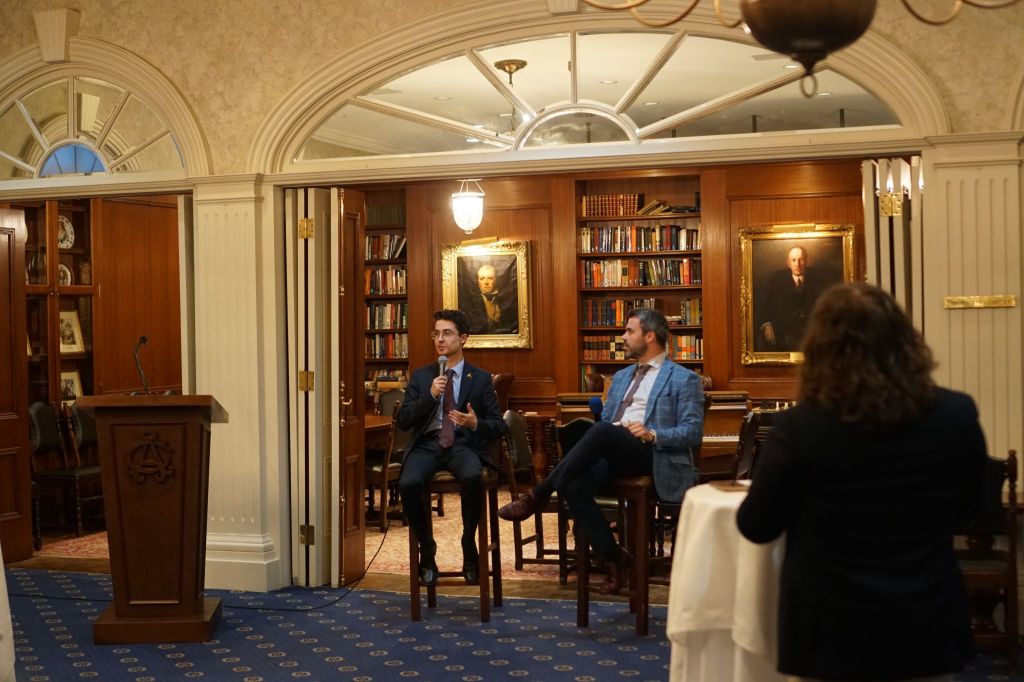

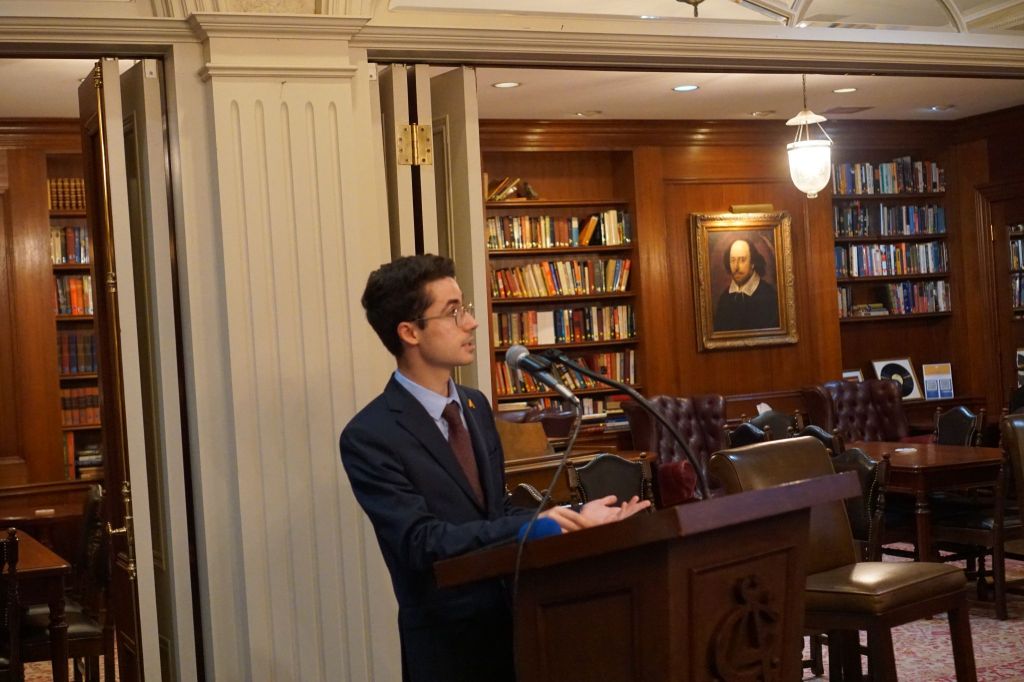
At the Albany Club launch of Anti-Civilization, Étienne-Alexandre Beauregard and I began by discussing how freedom came to be understood as emancipation from restraint, rather than the capacity to govern ourselves and pursue higher, genuinely common goods.
Étienne is a gifted writer, and courageous young thinker who carries himself with the lightness required to engage in difficult, boundary-pushing conversations.
One thread running through the conversation was what this trend means for Canadian politics. I suggested that our principal parties increasingly offer competing versions of liberalism. Conservatives may resist the latest reform, but procedural conservatism—without substantive commitments about human nature and the good life – is consistently liberalism ten or twenty years behind. As a strategy for long-term success, it doesn’t seem that viable, especially since their dominant philosophy has been to refuse to form and shape society through its formative institutions.
We then turned to emerging evidence on human flourishing reinforces the critique of choice maximization and growth as the be all and end all of politics. GDP and individual choice matter, but they appear to have diminishing returns after a certain point. Once basic economic security is achieved, people and societies with stronger families, deeper social bonds, religious participation, meaning, purpose, character and virtue can flourish more than wealthier but more atomized societies. We see this in the high performance of demographics within countries, and countries like the Philippines and Indonesia, who score much better because of the depth of their social and familial bonds, meaning and purpose, and religious and community participation. This would suggest that maximizing freedom and ever greater material is not the proper end of politics. More of both are good, but only up to a point.
We also discussed what common-good conservatism should look like in practice. At the most general level, I think it means recognizing that institutions, concepts, and norms exist to secure certain human goods, rather than promote extremely broad, loose and permissive definitions. If family formation, dignified work, public safety and cultural continuity are genuine common goods, our laws should help sustain and promote them. That could mean family law that takes marriage’s permanence and social purpose seriously; tax and benefit policies that recognize the work of raising children; support for different childcare arrangements, including care within the home; labour policies that strengthen worker representation in ways that are productivity enhancing, leaving the Marxist model of class antagonism behind; and firmer limits on drugs, pornography, gambling and other industries that profit from weakened self-control.
This requires abandoning the myth of state neutrality. Every legal order promotes certain ways of living and makes others more difficult. Cohabitation and divorce law affect marriage, and drug laws, consumption. Education forms children according to some account of knowledge, character and citizenship, even when each of these policy choices claim to promote ‘neutrality’ and a maximization of choice and permissiveness.
Network effects make neutrality still less plausible. Quebec regulates language because, without countervailing institutions, the surrounding sea of English would steadily overwhelm French. In the same way, a permissive legal environment does not leave people standing as autonomous individuals before an open field of choices. It permits the strongest commercial, technological and cultural forces to determine the social norm, which we see in how beholden people are to the deliberately addictive design of technology, and the prevalence of pornography, to name just two examples.
A common-good politics would therefore involve somewhat less permissiveness, thicker normative conceptions of social goods, and stronger incentives and disincentives. This is decidedly not authoritarian, but the proper use of authority to create the conditions in which freedom as agency – not licence – can emerge. There is a world of difference between power that is arbitrary and authority directed toward goods we have reason to know are conducive to human flourishing.
Thanks to Sutherland House, Ken Whyte and Sarah Miniaci-Davis for publishing it in English and hosting a great event, which MLI was happy to support. Check out the book – Anti-Civilization and the Case for the Common Good
We also discussed the book on MLI’s podcast, which can be found here.

We also discussed the book on MLI’s podcast, which can be found here.

