I was glad to contribute a few thoughts on the realignments underway in political philosophy in liberal democratic societies across the western world, which we’re behind on in Canada. As our societies grapple with spiritual apathy, declining social and cultural cohesion, and unprecedented levels of isolation, individualism, and family breakdown, a vibrant, culturally affirming, and distinctly conservative countercultural movement is emerging among some younger people.
Kudos to Danny Randell for launching the Foundations Forum, which aims to promote and further develop our civilizational inheritance, with a particular focus on its cultural intellectual riches. The Forums aims to recover our civilization’s intellectual, spiritual, and cultural heritage through education (newsletter, essays) and events. The newsletter is very much a ‘highlight reel of Western civilisation’.
Check it out and subscribe!
Peter Copeland: The new normal is anything but. The problem with a neo-liberal politics of normie-ism
 Peter Copeland
- 5 min read
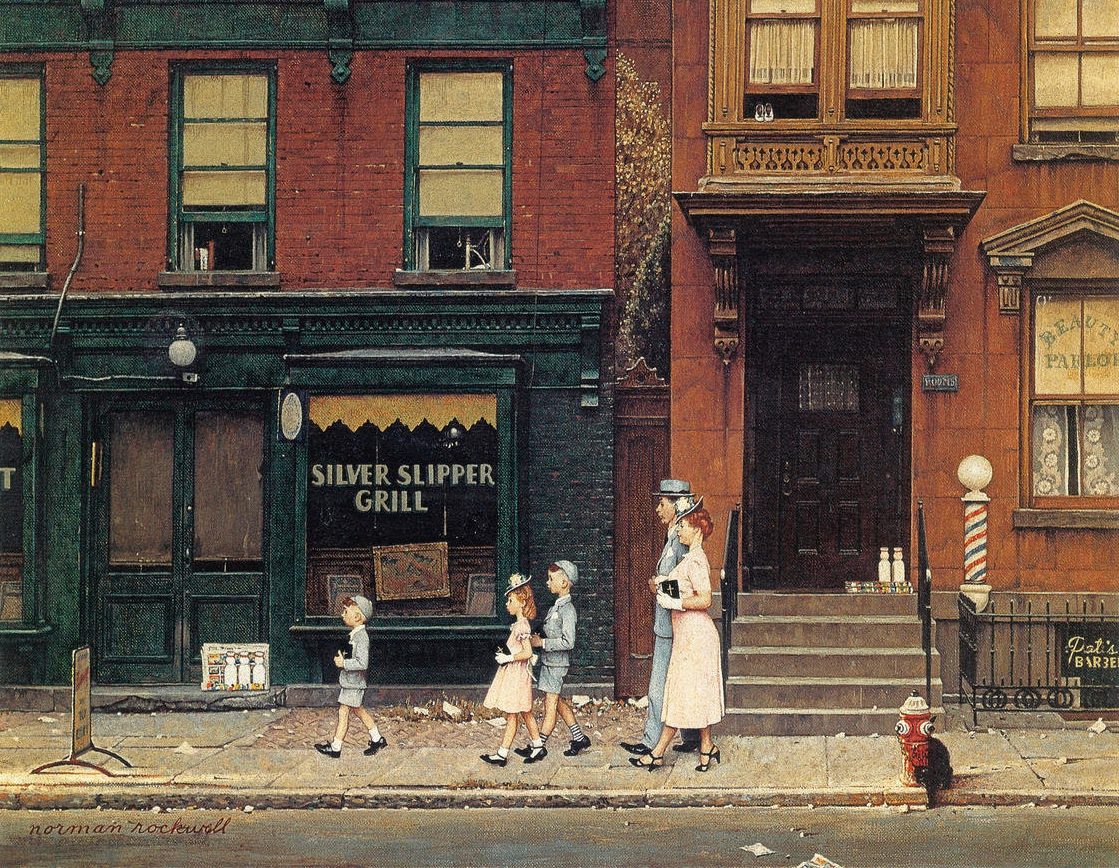
Sean Speer, co-founder of The Hub, wrote a piece recently on what he hopes will be the future of politics, a potential coalescence of both left and right under what he calls, ‘normie-ism.’
There is much I like in his argument, particularly its rejection of politics as theatre and its emphasis on moderation, conviviality, practical competence, and commitment to ordinary life. I also think that being ‘normal’ is a forgotten virtue. In an age of expression and display, and putting the narrow, empty self and all her petty projects above common concern, there’s something desperately needed in the essentially respectful, and moderate approach to living life in a way that mediates between extremes.
After years of populist politics from the right, and the coming wave of it on the left in figures like Zohran Mamdani, Andy Burnham and others, I also think that the public will soon be ready for this. It will probably resemble the ‘abundance liberalism’ that prioritizes building, competence, and growth of Ezra Klein and co., and have both a left and right wing variation. In this sense, I think Speer is sensing the start of a trend that’s likely to find a lot of resonance in the voting public in the short to medium term, but only temporarily. Once we’re through with the full effects of the left wing reaction to the right’s current momentum, then I think it will be clear that this ‘normalcy’ assumes a worldview and institutional support structure that is no longer there.
Here’s what I mean: Much of what’s considered ‘normal’ today is anything but healthy or ‘normal’ in the sense in which it is used to describe something normatively desirable. We live lives increasingly characterised by screen time, weak community bonds, declining faith, the celebration of sexual libertinism, and a mainstream culture whose news and entertainment media celebrate transgression, profanity, and constant self-aggrandisement.
I don’t think it’s normal to spend much of one’s waking hours looking at a screen rather than having relationships with people. It’s not normal to know more about national political controversies than your neighbours. It’s also not normal to delay marriage, have few or no children, to move repeatedly in search of marginal economic gains, or to rely on digital platforms for all of one’s entertainment. It is downright abnormal to have little connection to a religious life or cultural institutions; this has left a virtual tabula rasa on the hearts and minds of many who have been cut off from the history and rituals typically passed on by ancestors or extended family. It’s warped to see so many people manipulate and mutilate their bodies with tattoos, botox, plastic surgery, or pursue a subjective and delusional identity through bodily amputation and enhancement, and to treat the body as raw material for the subjective will to modify as it pleases. All of these things are celebrated as the fruits of choice, autonomy and freedom.
Yet despite having become increasingly ‘normal’ of late, these trends mark a sharp departure from what would have been considered normal just a generation or two ago. Nor do they contain the positive virtues associated with what we might call ‘procedural’ normality—those of moderation, of conviviality, of respecting others. The new normal is often coarse, and thrives on transgression, or a kind of sloppy, shoulder-shrugging attitude to the world. This is objectively bad for people and is not conducive to deeper happiness or well-being.
Taken together with the results that they’re leading to (declining fertility, loneliness, addiction, family breakdown, the hollowing out of relationship networks, and a desert spiritual landscape), these trends in what is now ‘normal’ look like signs of decadence and social exhaustion. This is the ‘ordinary lifestyle’ produced by an unchecked liberal approach to life in every domain, a new kind of ‘normal’ which is frankly anything but.
Still, there is an inheritance to be mined in what is genuinely normal and what used to be mainstream. Because ‘normal’ is the product of centuries of development in our ideas, institutions, and ways of life. It can’t be continuously assumed, it had to be built up and it can also be broken down.
The modern idea of a normal that’s evolving and ever new is largely what I hear in Sean’s argument, which effectively puts forward, unchanged, the liberal vision of life without modification, as though none of the trenchant critiques of it from left and right have any merit.
What is also interesting is that Speer’s take is very much a ‘liberal’ one, yet it describes the mainstream of Canadian conservatism, put forward by one of the nation’s leading conservatives. Whatever one thinks of the ideas, it helps explain why Canadian conservatism has so rarely been more than a qualification of liberal dominance. It largely consists of liberal premises adopted several years later and administered somewhat more cautiously.
Some postliberal arguments are undoubtedly too root-and-branch in their critique. But a major contention is quite persuasive — that the liberal order inherited a set of pre-political institutions, habits, and beliefs that it depended upon but did not create. A normative structure of family and social life, religious formation, communal bonds, inherited moral norms, and a broadly shared understanding of human flourishing all supplied the social and intellectual capital that made liberal institutions workable in the first place.
A normative structure of family and social life, religious formation, communal bonds, inherited moral norms, and a broadly shared understanding of human flourishing all supplied the social and intellectual capital that made liberal institutions workable in the first place.
Over time, liberalism has helped erode many of those foundations. More often than not, the cause of our civilizational decline has not been ‘cultural marxism’, but excesses in personal autonomy.
I don’t think this largely liberal view can now charge forward anew under the banner of normality, because its citizenry increasingly lacks the human, moral, and intellectual capital upon which the positive aspects of that normality once relied. I think we see that in ample social pathologies of the present day. That is why a serious effort to cultivate a new elite and rebuild culture from the bottom up is so important. It is also why conservatives should be more forthright about the intelligent—but limited and non-overbearing—use of state power to support the institutions and conditions on which a healthy society depends.
What I see in Speer’s vision, by contrast, is a rejection both of the need for this work and of the approaches required to undertake it. Normie-ism appears to assume that healthy ordinary life can be recovered without intentionally rebuilding the philosophical worldview and institutional foundations that could sustain some version of it.
I, however, am bullish on the future, as something very different from this normie-ism is emerging among a small but growing, and often highly educated part of the population—a pursuit of higher ideals, thicker communities, religious faith, family life, and rootedness. It is, in some respects, an aspirational counter-elite. None of this will be a simple ‘recovery’ of some idealized past; properly speaking it is going to be a fulfilment of the ideals of human flourishing that have only ever been partially realised, and can always be developed further. It will have influence through the bottom up, in culture, but also top down via the people with such views shaping institutions from within.
Many of the best features of Speer’s normie-ism are present in this vision too, but it needs to be grounded in a more substantive account of what makes a life good, and accompanied by a willingness to pursue to it through culture and politics alike. I am much more hopeful for this vision, rather than the politics of the normie-ism of a bygone age.
Peter Copeland is (Acting) Director of Domestic Policy at the Macdonald-Laurier Institute.
The Foundations Forum shares great writing that encourages Canadians to reflect on truth, beauty, and the rich inheritance of Western Civilisation. Opinions of authors do not necessarily represent the views of the organisation.

