

Human Well-Being Indices and Harvard’s Global Flourishing Study
Remarks from a Presentation on Human Well-being Indices and Harvard’s Global Flourishing Study at the second instance of Catholic Conscience’s conference on Building a Culture of Life & Dignity
Thank you to Matt, and the organizers, and all of you joining us today.
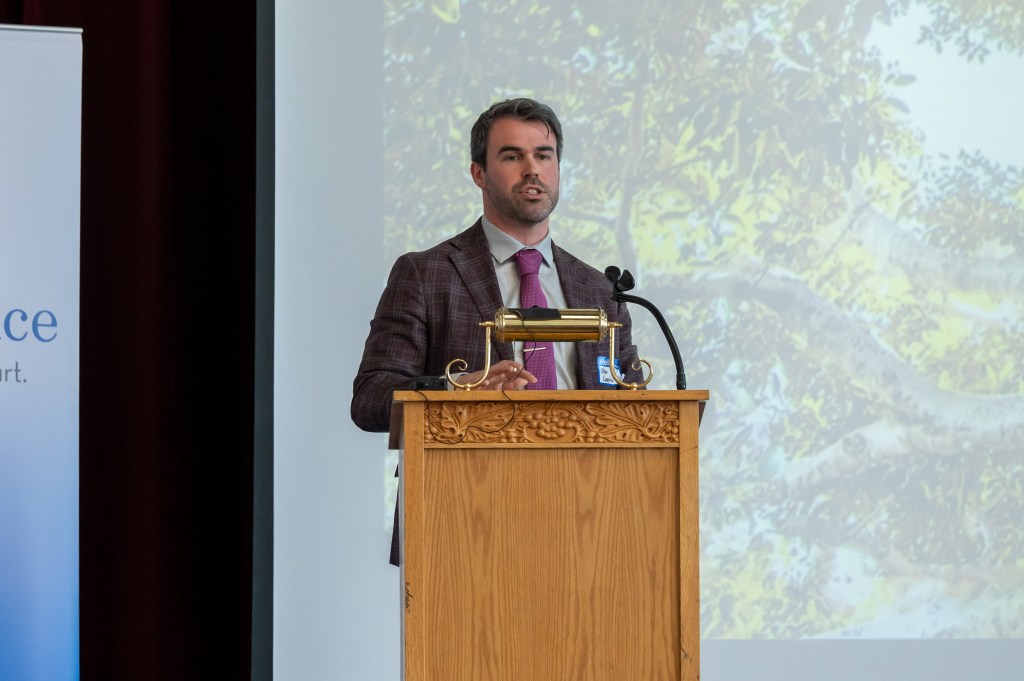
It’s good to be back after a short hiatus of a few years, where we now have every intention of returning again each year in earnest. I’m Peter Copeland, I was around in the early days when Matt started Catholic Conscience, along with my good friend Dominic Chan, where those pandemic years afforded us a good deal of time to build out the organization. I now work for the Macdonald-Laurier Institute, Canada’s foremost federally-focused policy institute, in the domestic policy program.
We must have been very influential in this time indeed, because last time around, I made a presentation on the common measures we use to assess human well-being and life satisfaction, their strengths and deficiencies, and a novel way to consider doing so, and lo and behold, Harvard’s Chan school of medicine decided to undertake a worldwide study of human flourishing, now in its third iteration, called the Global Flourishing study, a part of their Human Flourishing Program. There must have been something in the air – and indeed there was – a global pandemic. I think though, this is a good example of a correlational relationship and not a causal one – distinctions very pertinent to today’s discussion. We are very pleased to have with us today someone working in that program.
Our guest is going to get into the details of what human well-being, or flourishing is, what some common measures of it are, their strengths and deficiencies, and what the Global flourishing program tries to address.
To start, I’ll just say that, as a think tank director, I’m interested in the public policy implications of measures of well-being. GDP per capita, and other static indicators like crime rates, life spans, education levels and test score results, as well as subjective reports of life satisfaction are all important measures of broad outcomes that we know are in some way correlated with having a good life. But they are just that – outcomes that don’t necessarily tell us about both the unique lives of individuals as they don’t track them over time, or the deeper elements of well-being, which are often the strengths of our bonds, the sense of meaning and purpose that we have in our lives. While correlated with numerous other good outcomes, GDP per capita only captures monetized transactions and assumes any economic transaction is an increase in value, including those that quite clearly do not increase human well-being, such as online gambling, the rise of the online self-prostitution site Only Fans, or numerous other industries – known under the epithet, limbic markets – that prey on human vulnerabilities. The UN happiness survey, which was just released again earlier this year, conceives of well-being as subjective life satisfaction as measured through self-reports.
Furthermore, they tend to assume an understanding of human flourishing that is very often at odds with a richer understanding of well-being. To varying degree, they conceive of well-being as purely subjective, the product of maximizing choice and practicing self-expression. They assume material prosperity and other material indicators are of great importance – as though happiness were a product of maximizing control, choice, and acquisition. They fail, in many respects, to understand both that humans have a nature, which is mouldable, shapable, and admits of individual variation, but also has objective features – even a core set of ends or purposes that fulfill us in a deep way.
And that is just at the issue of the conceptualization of well-being, and its measurement. What your results are depend very much on what you choose to measure. There is then the question of its implications for policy, politics and society. It is relatively easy to establish correlations, say, between the rise in smartphone and social media use that we’ve seen in the latest UN happiness survey, and the declines in subjective well-being over time. Or, the deindustrialization of anglosphere countries and its relationship to labour arbitrage, international trade and a lack of industrial policy. And it is consistent with other literature. But it is quite another thing to draw inferences both about these broad outcomes and the factors behind them, and then to attempt to conceive of a set of policy interventions and how they might affect well-being in various ways.
And so, I hope, some day when I have more time at my disposal, to find ways both of measuring understanding the nature and well-being of organisms as they develop over time. In particular, what are the crucial steps or factors required for the development of capacities that lead to flourishing.
For example, we know of the success sequence – finish secondary school, get a job and married before you have children, but that is very thin, and says little about other important features that lead to a good life, such as educational formation, character development, religiosity, the importance of a mother and father and stable household, and strong friend networks.
I also think we need better tools to understand the whole picture effect of a policy, by attempting to quantify expected side effects. Often, we tell a story that is based off of the limited things we concern ourselves with in the measurements we conduct around them. And this can give an inaccurate picture of the effects of a policy, even encouraging an overly simplistic, and activist-interventionist approach that in fact stymies the development of many social bonds, as we’ve seen with the rise of the welfare state, the development of extensive bureaucracies that have in many senses, undercut the mediating institutions of faith, family, and civil society.
And lastly, wouldn’t it be interesting to be able to produce a normative model of human flourishing at an individual and social level to act as a ‘measure’ for policy interventions.
And there are interesting techniques out there to do so. Rather than looking at snapshots of indicators, and correlating them with certain interventions, the technique known as causal modelling is being deployed more and more across the social sciences.
Causal modelling uses diagrams and algebra to map hypothesized cause-and-effect pathways, account for confounding variables, and distinguish genuine causation from mere correlation. By incorporating counterfactual questions, it estimates the causal weight of different variables across complex chains of influence.
This makes it a richer tool than simple statistics, especially for social science and public policy, because it can model how many interacting factors shape outcomes over time. It also resembles an Aristotelian/Thomistic “powers” or “capacities” view by treating variables as having different potential causal states, dependent upon that capacity’s state of development, relative to an ideal. Think, for example, of the family as a loving bond between husband and wife as the ideal unit, and how lack of love, understanding, cooperation, or other forms of relationship, like divorce, etc., are underdeveloped manifestations of that ideal.
Like the Human Flourishing Program and the Global flourishing study, this model of human nature, what our ends are, what the capacities are that we need to develop in order to attain them, is based both in the natural law and Catholic and Christian social teaching to a significant degree.
You might hear more from me about the policy implications of measures of well-being in our Q&A, but before we do so, I’m going to turn it over to our guest today for a presentation on Harvard’s Human Flourishing Program and the Global Flourishing Study.
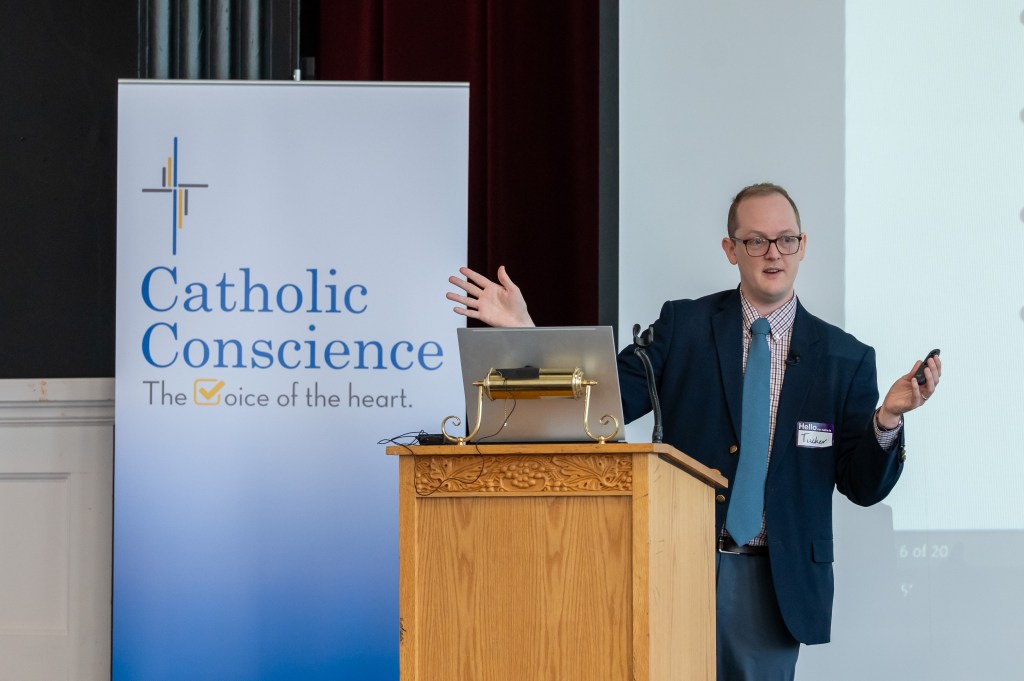
Tucker Sigourney is a John and Daria Barry Postdoctoral Fellow at Harvard University’s Human Flourishing Program. His academic work focuses mainly on ethics, philosophy of action, practical reason, moral psychology, forgiveness, charity, redemption, and the Thomistic-Aristotelian tradition. On his personal academic site, he describes his central interests as ethics and philosophy of mind and action, drawing especially on St. Thomas Aquinas, Aristotle, Elizabeth Anscombe, Augustine, Kierkegaard, Scotus, and others in that tradition. He holds degrees in physics and philosophy from Grove City College and a PhD from Florida State University.
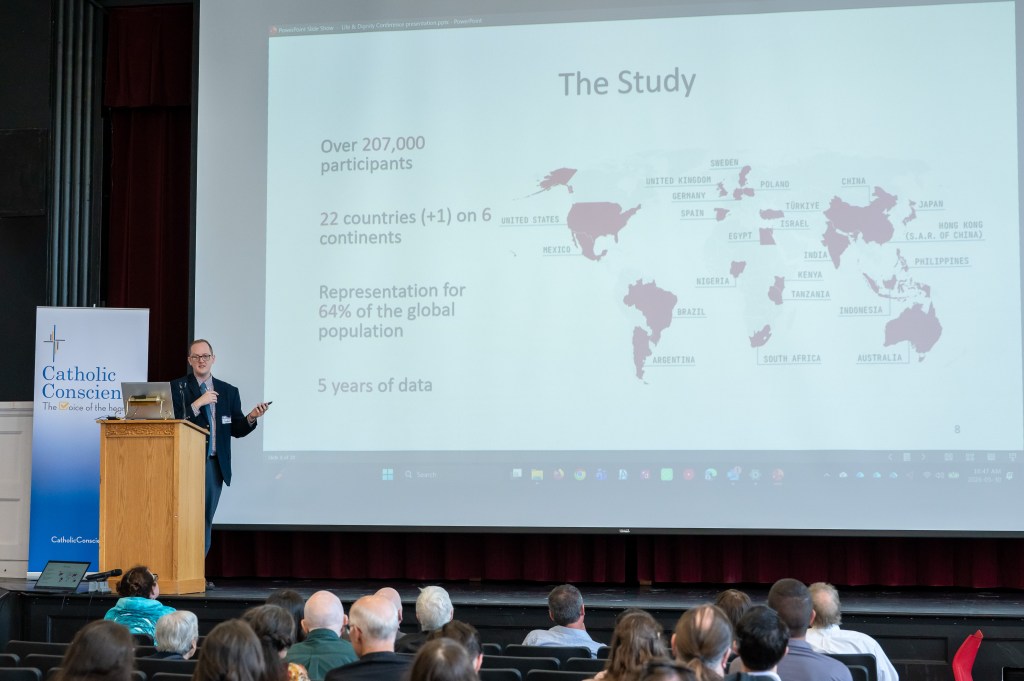
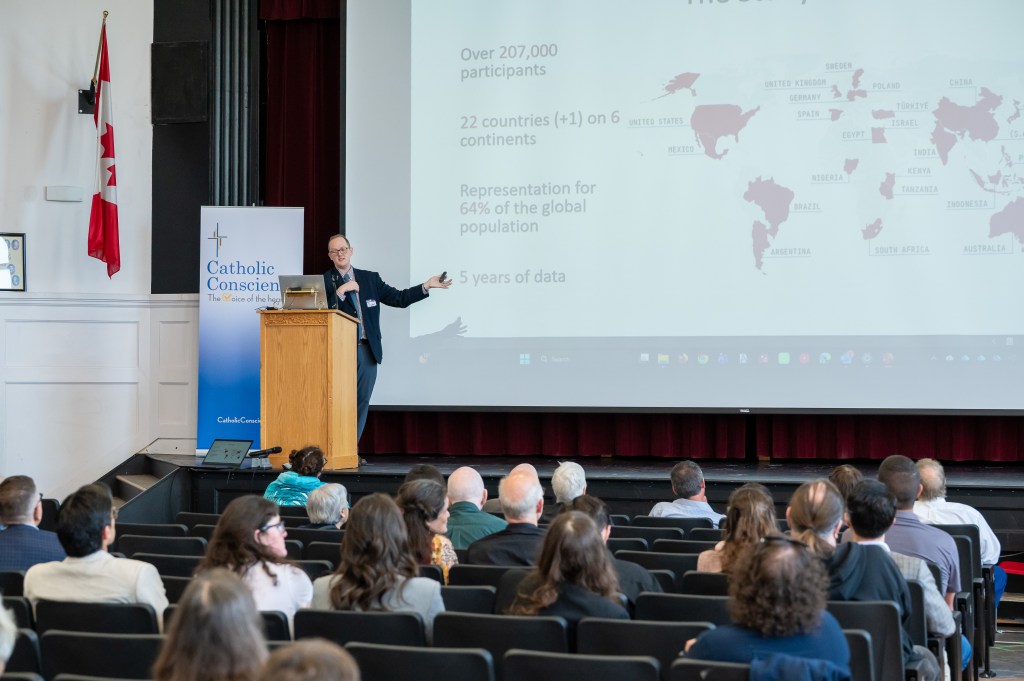
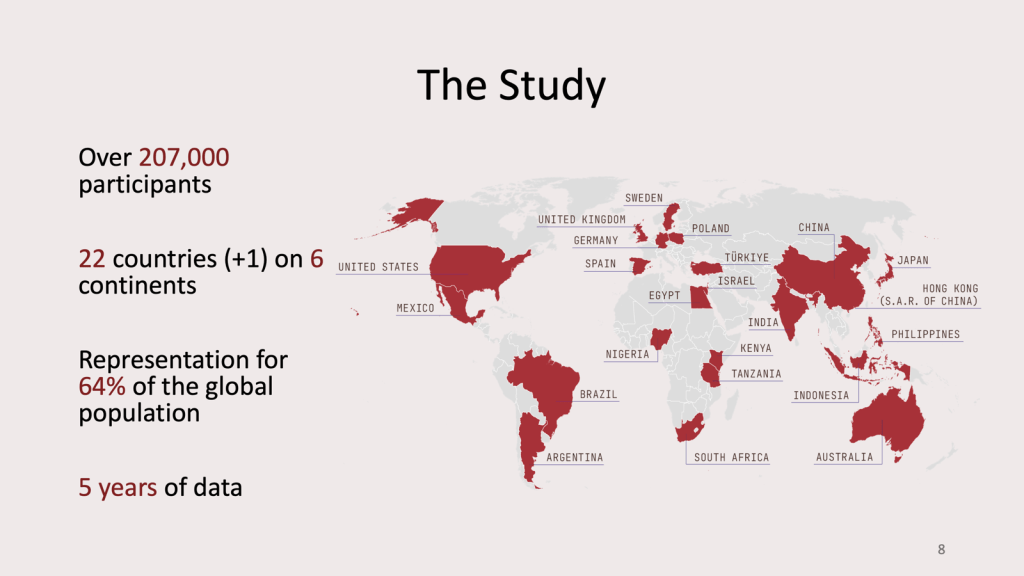
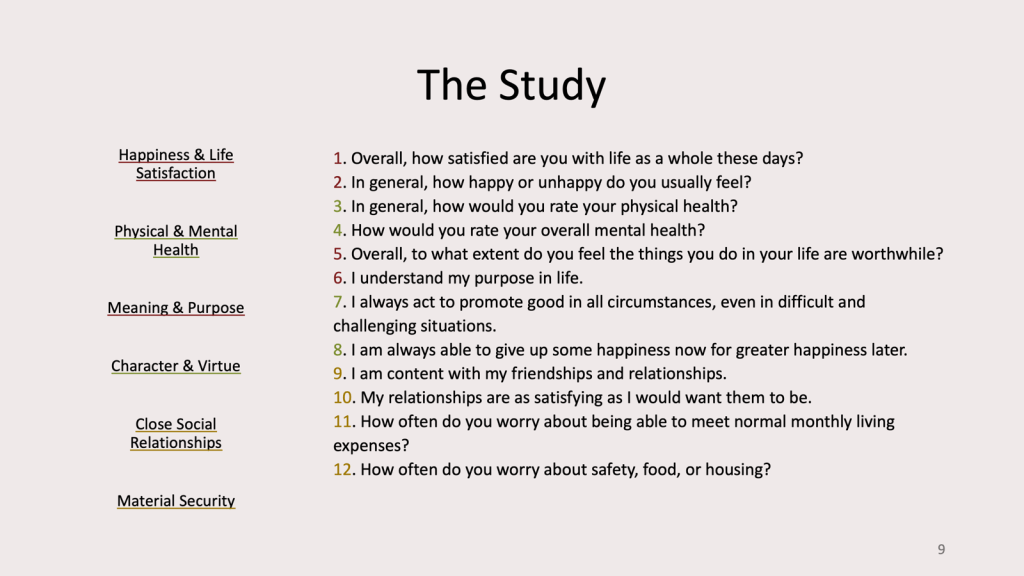
Harvard’s Global Flourishing Study and the Human Flourishing Program
Highlights of Recent Findings
- Young people are doing markedly worse.
Across the pooled data, flourishing is roughly flat from ages 18–49 and then rises with age, rather than following the older U-shaped happiness pattern. The authors flag this as troubling evidence that young adults are not doing as well as previous generations. - Marriage, employment, and religious service attendance are strongly associated with flourishing.
Married respondents report higher flourishing than separated or divorced respondents; employed and self-employed respondents score higher than the unemployed; and religious service attendance shows a particularly strong gradient, from an average flourishing score of 6.86 among those who never attend to 7.67 among those attending more than weekly. - Religious participation is one of the most consistent predictors.
The authors say religious service attendance is among the factors most consistently associated with well-being across countries and outcomes, often with a “steep gradient,” though not for every outcome. It was not beneficially associated with everything, and was linked with slightly higher reported suffering and physical pain in some analyses. - Richer countries do not necessarily score higher on the more humanistic dimensions of flourishing.
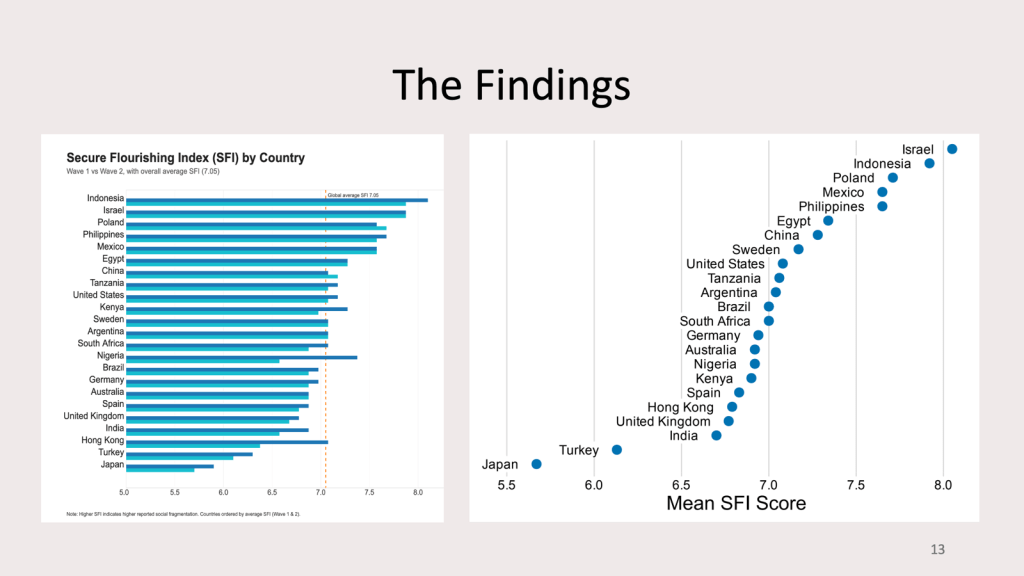
The study finds a striking negative relationship between national wealth and reported meaning/purpose. Countries such as Indonesia, Mexico, Brazil, Argentina, and the Philippines score relatively high on more humanistic dimensions, while some wealthier countries score lower. - Country rankings differ sharply from the World Happiness Report.
Without financial security included, the highest flourishing scores were in Indonesia, Mexico, and the Philippines; the lowest were in Japan, Turkey, and the United Kingdom. - Childhood matters, especially family and belonging.
Good maternal and paternal relationships are broadly associated with adult flourishing. Childhood abuse and feeling like an outsider are generally associated with lower adult meaning, hope, gratitude, delayed gratification, and other well-being measures.

