in Latest News, Multimedia, Political Tradition, Past Events, Video, Fathers of Confederation, Patrice Dutil, Peter Copeland
Reading Time: 2 mins read
A A
On May 6, 2025, the Macdonald-Laurier Institute hosted a thought-provoking discussion on the leadership and legacy of Prime Ministers Sir John A. Macdonald and John Diefenbaker, featuring historians and authors Patrice Dutil and Robert Plamondon.
While some view the past as a source of pride and inspiration, others see it as a burden, best left behind. But as Dutil and Plamondon argued, the legacy of these two leaders is more than a matter of historical record—it is a foundation for understanding Canada’s national identity and democratic institutions.
In our hyper-individualistic, postmodern age—where the autonomous individual is valued above collective identities, authority, tradition, and time-tested norms are often dismissed, and attachments to place, people, and even family are viewed with suspicion—can we still honour our forebears and our past? Or must every legacy stand trial with the decks increasingly stacked against them?
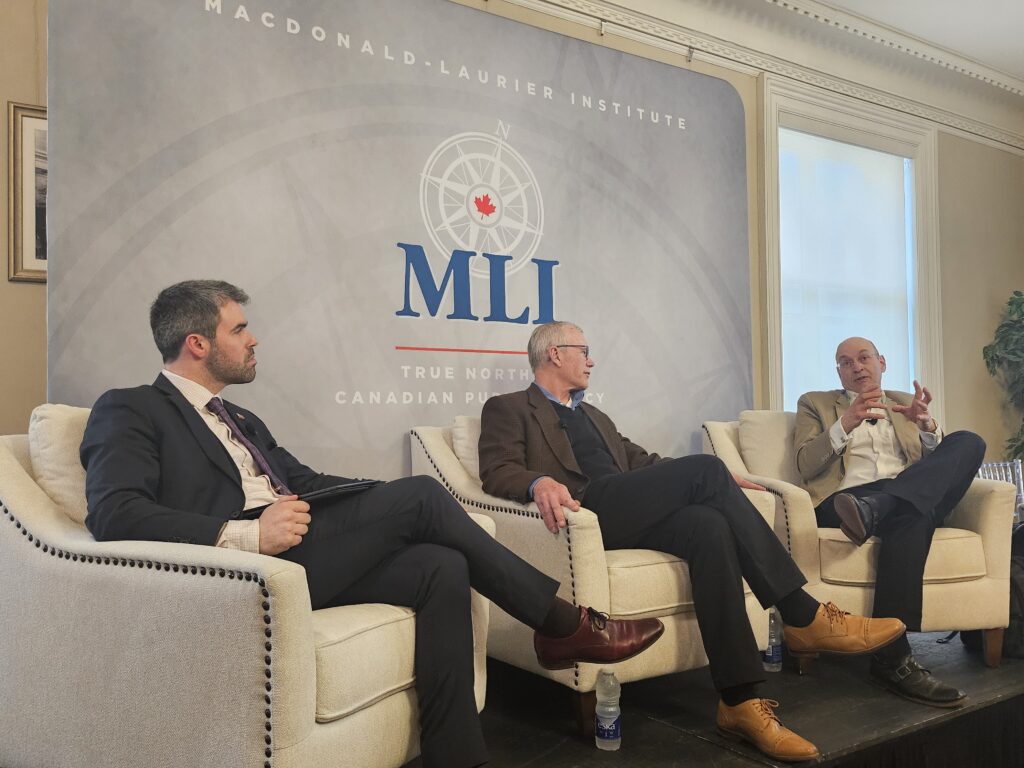
Drawing from their respective works, Dutil and Plamondon explored how these leaders helped shape Canada’s national character and democratic institutions.
Dutil emphasized the importance of civic inheritance, urging Canadians to recognize the visionary accomplishments of leaders like Macdonald who laid the foundation for Confederation. Plamondon, who has written extensively on Trudeau, Chrétien, and now Diefenbaker, argued that Canada is an “unlikely” country—one that has endured despite deep regional, linguistic, and external pressures. Both men asserted that Diefenbaker, like Macdonald, was ultimately driven by a powerful sense of duty to Canada.
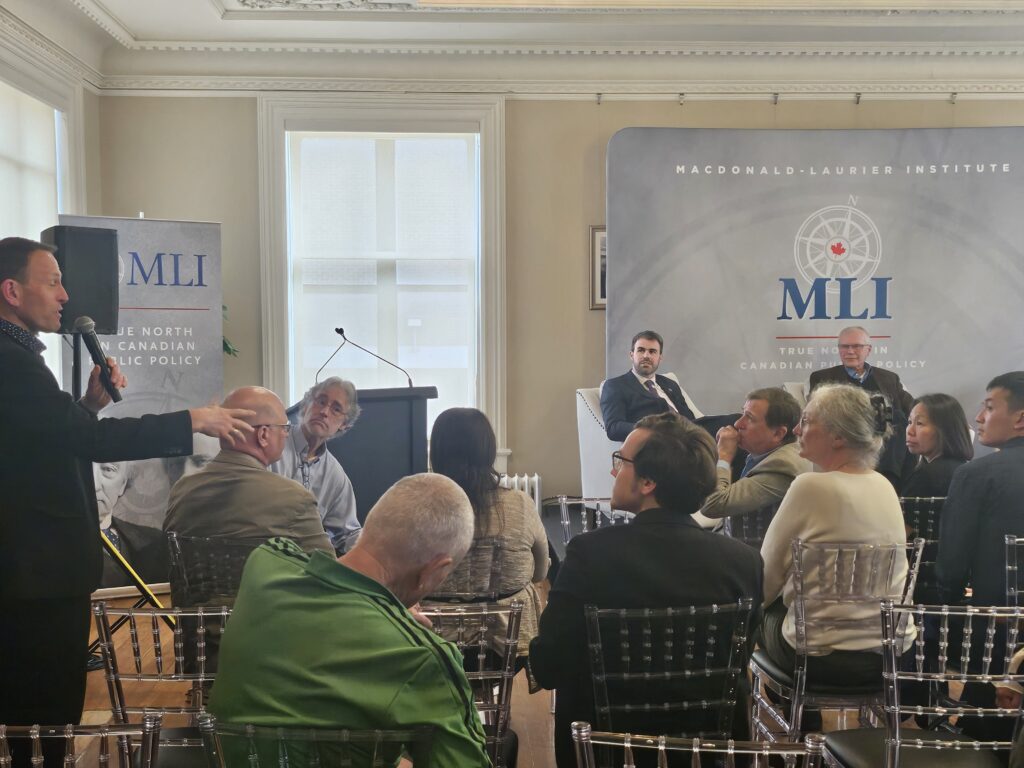
A key theme of the discussion was the role of history in shaping national identity. While acknowledging the darker chapters of Canada’s past, the speakers warned against allowing historical grievances to obscure moments of unity, achievement, and resilience. In today’s polarized climate, Dutil and Plamondon called for a renewed commitment to historical understanding—not as a tool of condemnation, but as a source of guidance, reconciliation, and national purpose.
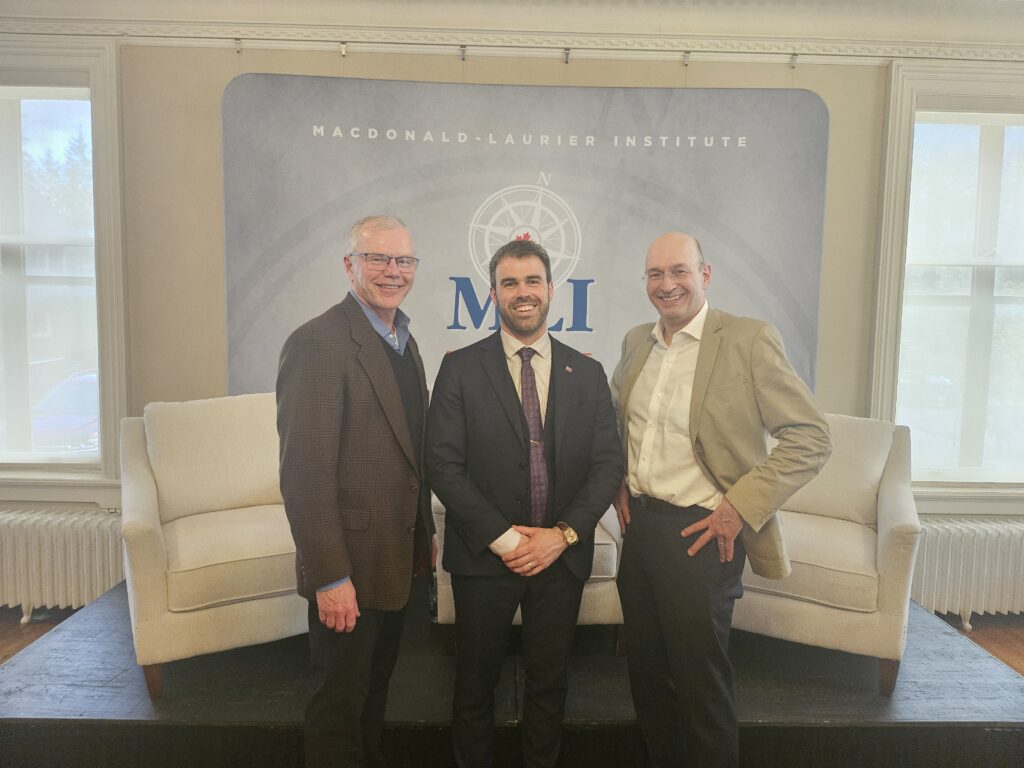
 Peter Copeland