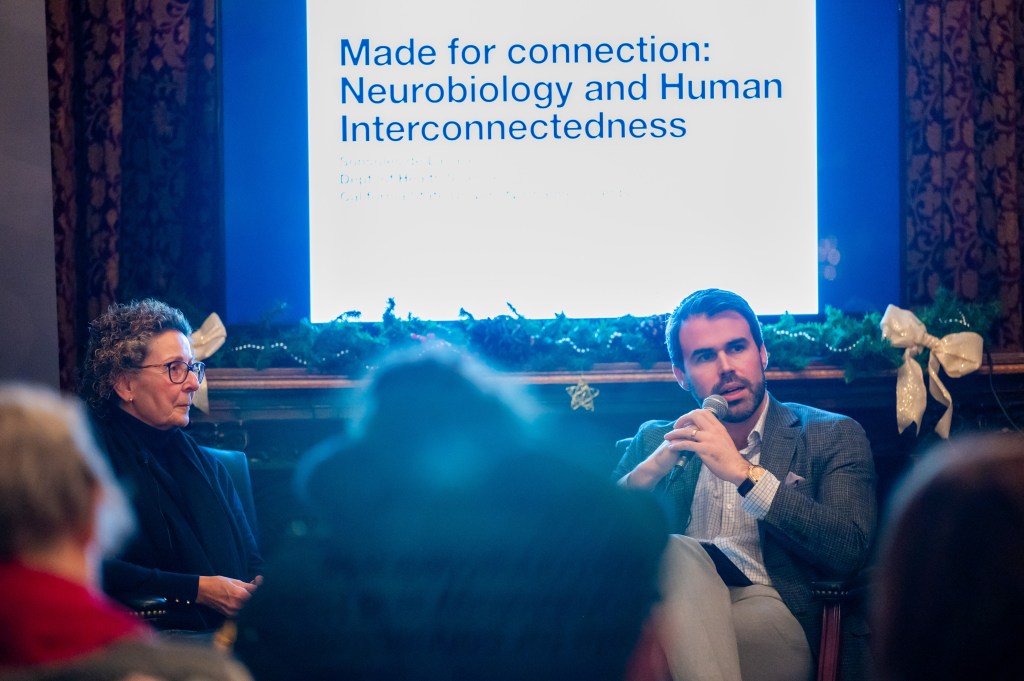
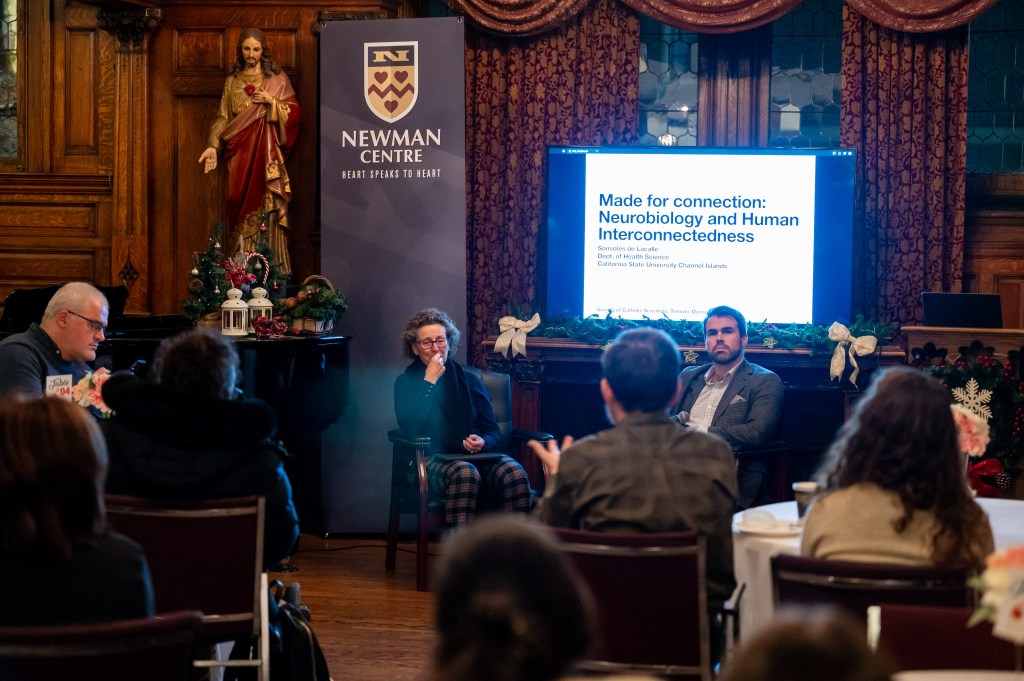
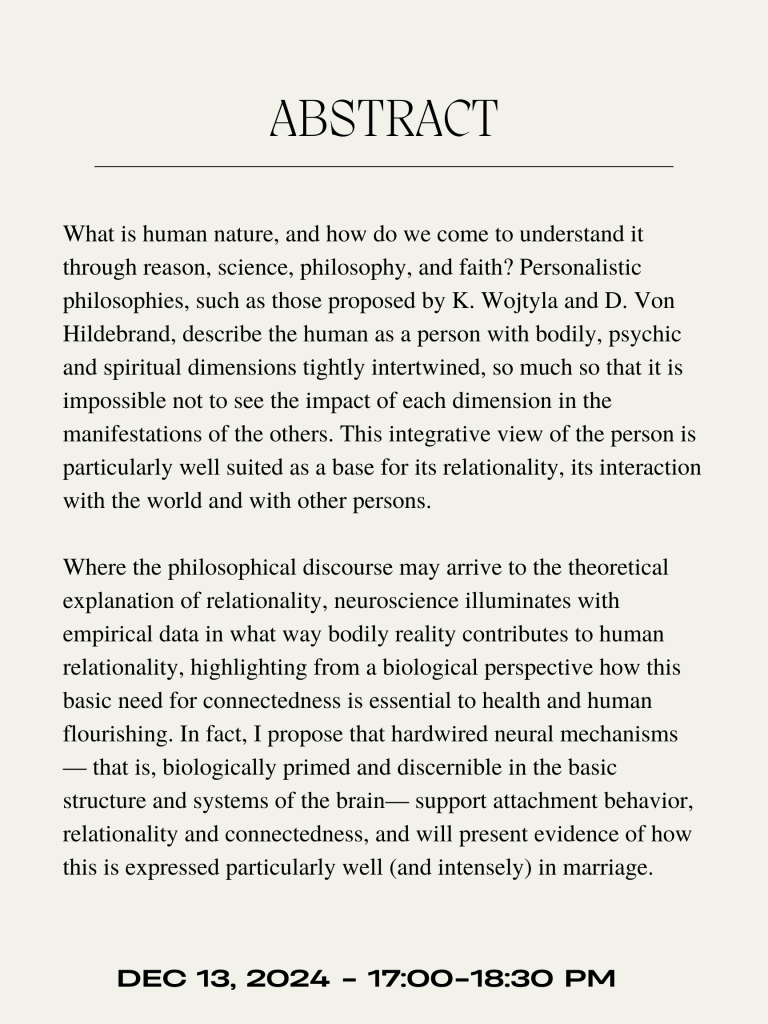
What is human nature, and how do we come to understand it through reason, science, philosophy, and faith? There is a strident cult to abolish the possibility of a human nature as we understand it with the power of reason. While it is not new, it is just becoming more vociferous through the use of social media. This cult wants to make us believe that humans are amorphous beings that can acquire whatever reality they want. Personalistic philosophies, such as those proposed by K. Wojtyla and D. Von Hildebrand, describe the human as a person with bodily, psychic and spiritual dimensions tightly intertwined, so much so that it is impossible not to see the impact of each dimension in the manifestations of the others. This integrative view of the person is particularly well suited as a base for its relationality, its interaction with the world and with other persons.
Where the philosophical discourse may arrive to the theoretical explanation of relationality, neuroscience illuminates with empirical data in what way bodily reality contributes to human relationality, highlighting from a biological perspective how this basic need for connectedness is essential to health and human flourishing. In fact, I propose that hardwired neural mechanisms — that is, biologically primed and discernible in the basic structure and systems of the brain— support attachment behaviour, relationality and connectedness, and will present evidence of how this is expressed particularly well (and intensely) in marriage.
Timestamps:
- 00:00:00 Introductions
- 00:04:50 The biological and neurological basis for the relational character of the human person
- 00:09:30 Sexual dimorphism and its biological and behavioural effects
- 00:14:15 How sexual differentiation occurs and develops over time
- 00:18:25 The human meaning of sexual differentiation
- 00:23:20 The emergence of the term ‘gender’ and ‘gender ideology’
- 00:28:00 Biological and neurological differences between males and females
- 00:30:00 The effects of bonding, marriage, parenting, and monogamous relationships on male and female physiology and well-being
- 00:43:45 The negative effects of divorce and cohabitation on parents and children
- 00:46:00 The positive health effects of attachment bonds and their evolutionary and biological basis
Q&A
- 00:49:35 Demarcating the healthy from the unhealthy with biology and neuroscience
- 00:54:00 How to lean into sexual dimorphism and complementarity in healthy ways
- 00:56:10 The desire to transgress natural boundaries and the phenomenon of ‘transhumanism’
- 00:59:40 The notion that people are ‘autonomous’ and ‘self-sufficient’
- 01:03:50 The effects of autonomy, individualism and boundary transgression on medicine and the natural sciences
- 01:09:00 How to promote the integrated view of the person in the 21st century?
- 01:12:40 Audience Q&A
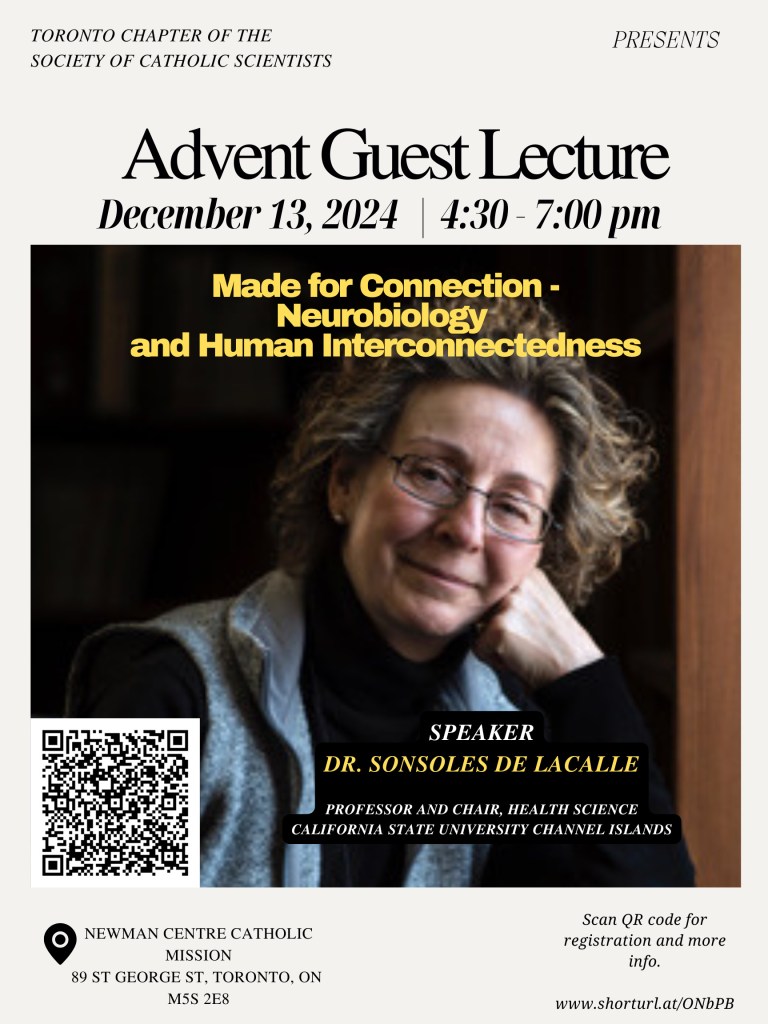
Speaker Biography – Sonsoles de Lacalle
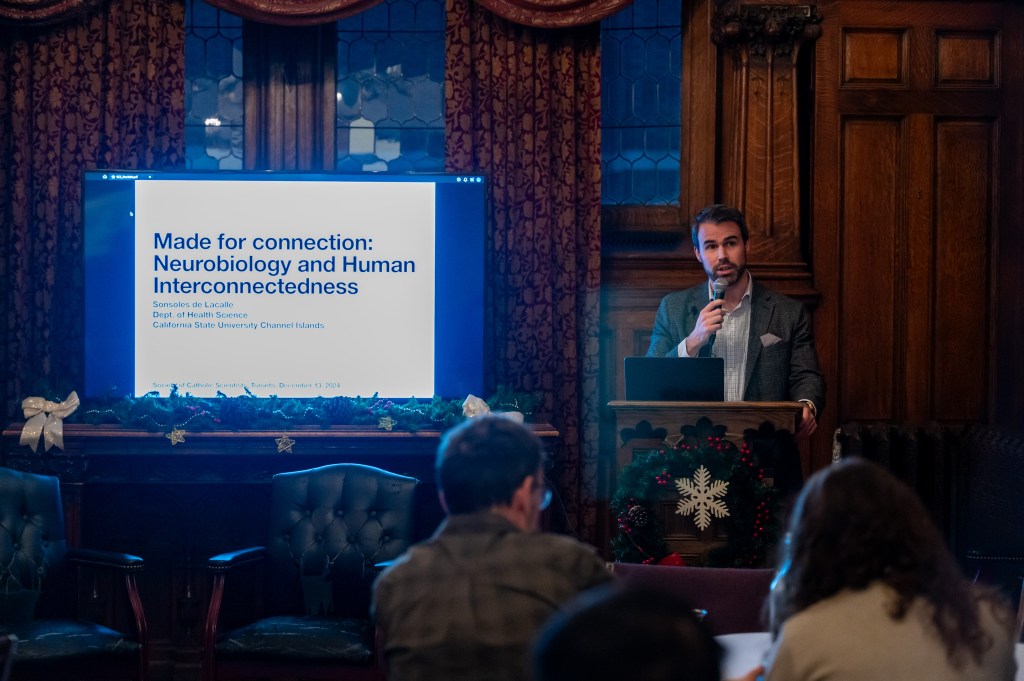
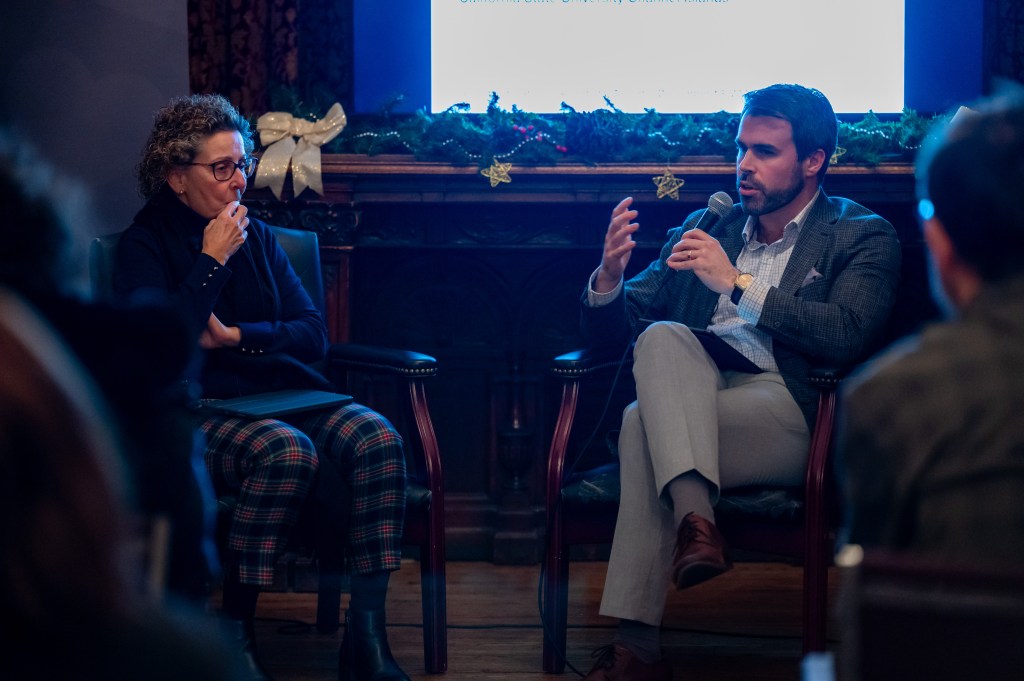
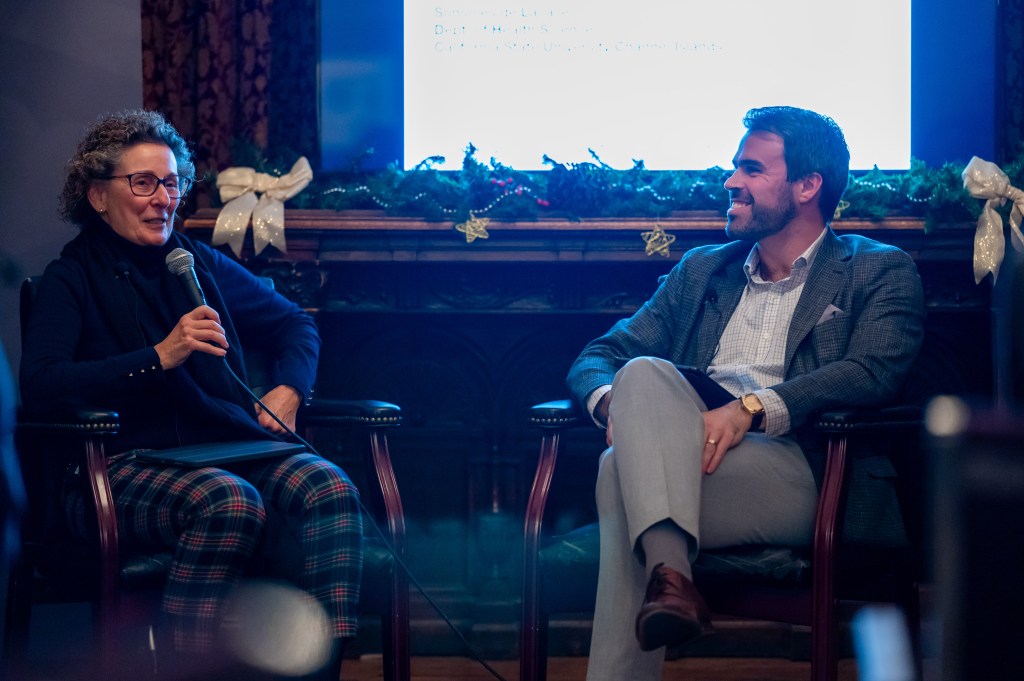
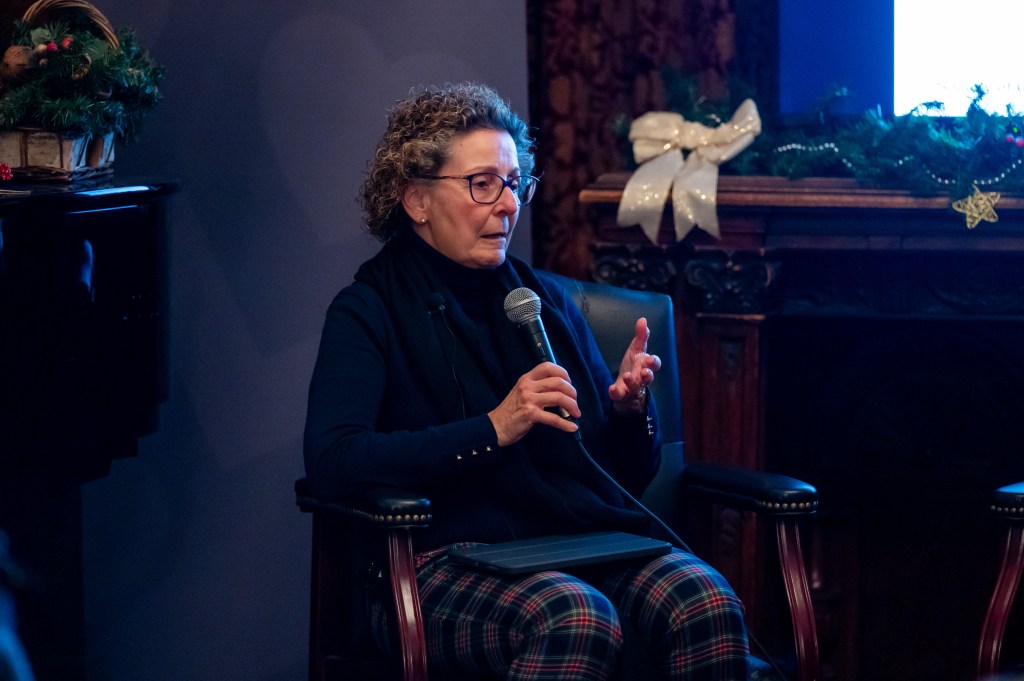
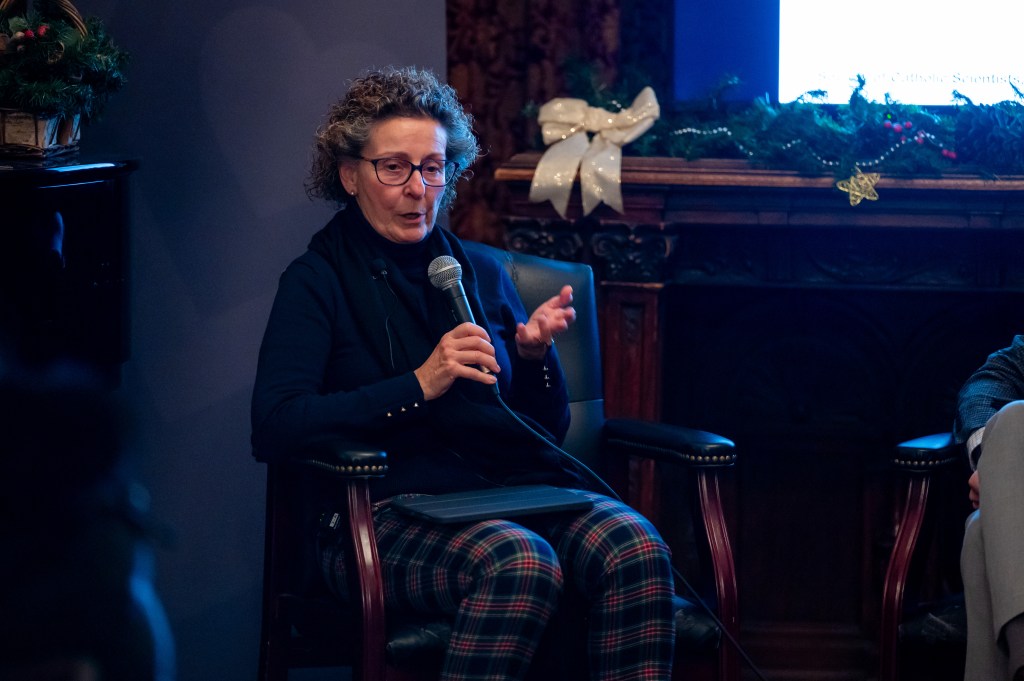
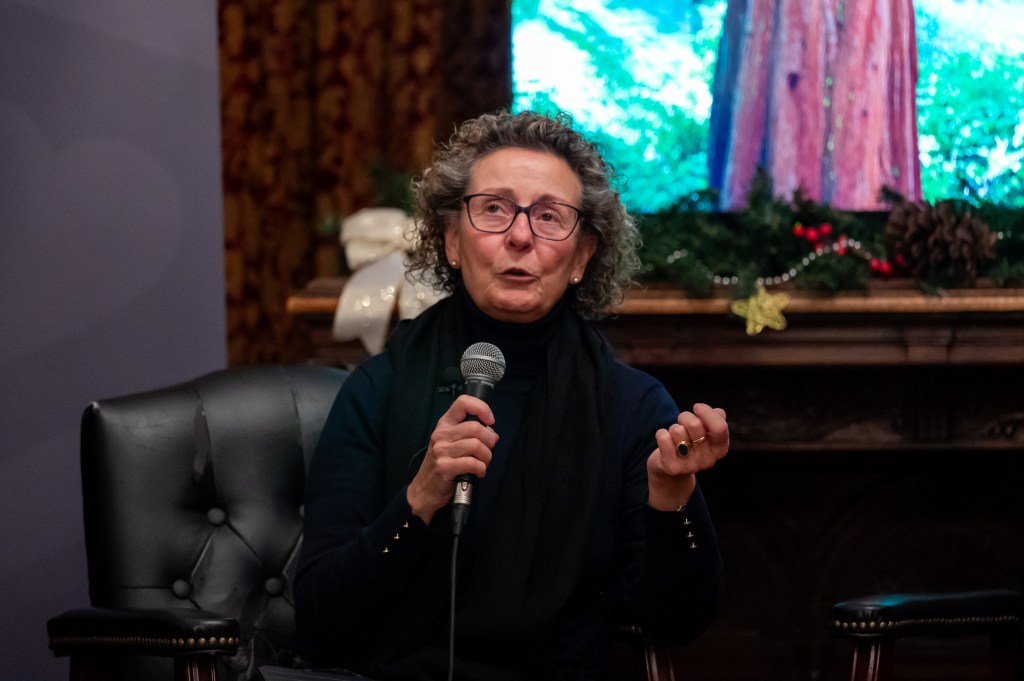
Sonsoles de Lacalle obtained her M.D./Ph.D. from the University of Navarra (Spain). In 1990 she moved to the US with a Fulbright Fellowship to train with Prof. Clif B. Saper in the Department of Pharmacological and Physiological Sciences at the University of Chicago. Her academic experience includes teaching and research in a medical setting (at the Pritzker School of Medicine, Harvard Medical School, and at Ohio University’s College of Medicine) and in predominantly undergraduate institutions (CSU Los Angeles, C. R. Drew University and currently at CSU Channel Islands). Dr. de Lacalle has mentored undergraduate, graduate and medical school students, directed a training program in mental health research for undergraduates, funded by the National Institutes of Health (NIH), and has served as Program Director in NIH center grants. Her research has been supported by NIH, the William F. Milton Foundation and the Department of Defense. Dr. de Lacalle serves on several NIH study sections and Fellowship Programs. She has published in peer-reviewed journals and has presented many invited lectures at international symposia and universities. Dr. de Lacalle is a member of the Society for Neuroscience, AAAS, Faculty for Undergraduate Neuroscience, the Fulbright Alumni Association, and the Council for Undergraduate Research. She has also served in the Natural Sciences Advisory Committee for Los Angeles Southwest College, in the Board of Directors of Lexington College, the DO/PhD Advisory Committee for the New York College of Osteopathic Medicine, the Graduate Council at Ohio University and and currently chairs the Department of Health Science at CSU Channel Islands.



 Peter Copeland