
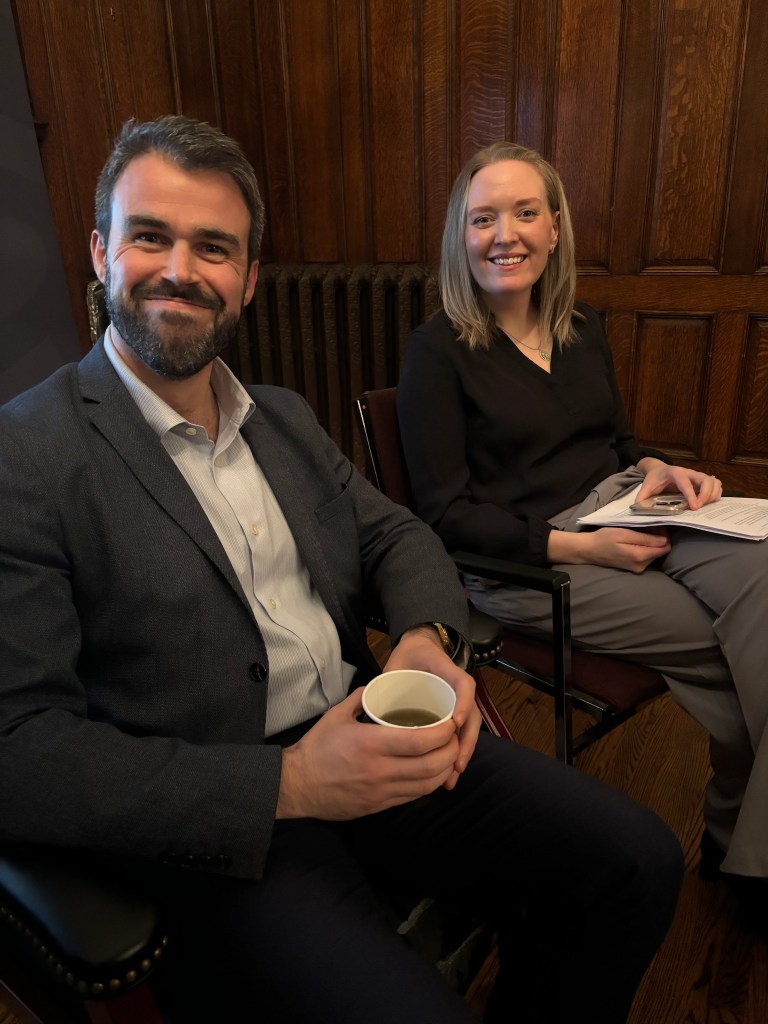
It was a great privilege to give a talk to the first cohort of Lumen Forum fellows at the Newman Centre, University of Toronto.
This initiative is a first of its kind in Canada: a program focused on developing leaders through formation and fellowship. Through a rich curriculum in applied Catholic Social Doctrine and Virtuous Leadership, Lumen empowers leaders to live out a Christian mission in their career and cultural engagement.
Check out the programs’ scope and content here
#Catholic #CatholicSocialTeaching #Virtue #Faith #Reason #Subsidiarity #Solidarity #HumanDignity #CommonGood #Truth #Beauty #Goodness


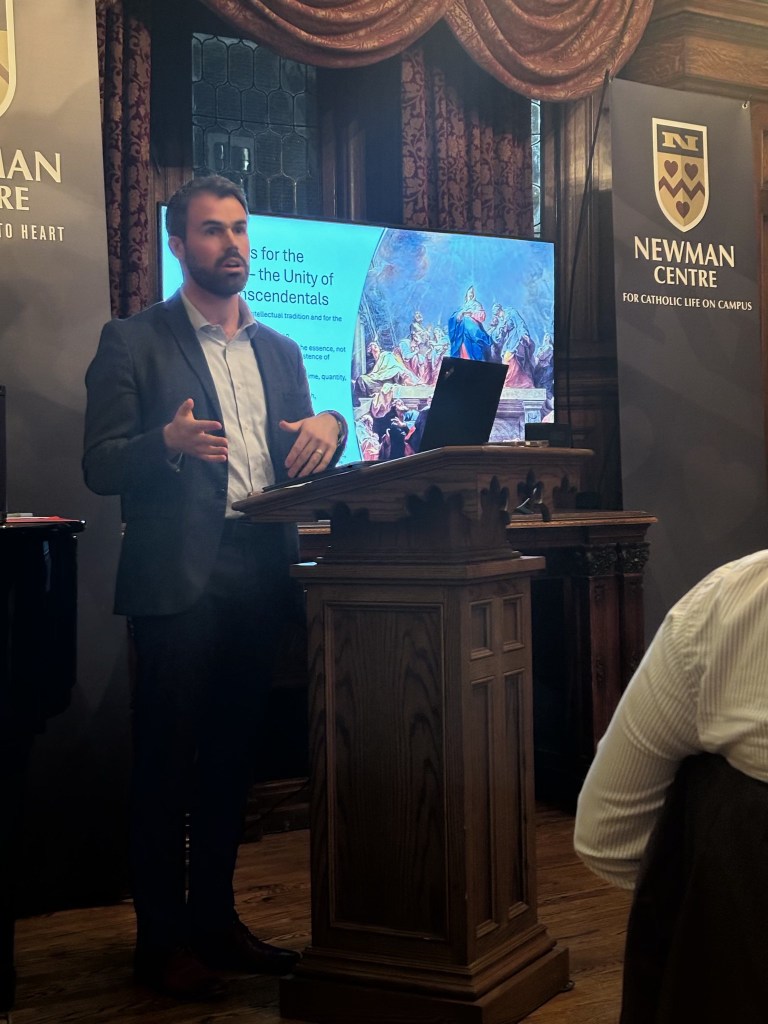

Truth, beauty, and goodness are interconnected as transcendental properties of being, meaning they exceed the classifications of reality and are fundamentally linked to the essence of existence. Each being is considered good, true, one, and beautiful in a metaphysical sense, indicating that these properties are convertible; for instance, goodness and being are interchangeable, as are truth and being.
The Catechism of the Catholic Church emphasizes that truth carries with it the splendour of spiritual beauty, suggesting that the expression of truth can manifest in various forms, including artistic beauty. This relationship is further articulated in the context of sacred art, which is meant to evoke and glorify the mystery of God, thereby leading to the adoration of the Creator.
Pope John Paul II noted that beauty serves as a visible form of the good, and the two concepts are deeply intertwined, as beauty can attract and lead individuals toward the good. The Via Pulchritudinis, or the way of beauty, is proposed as a pathway that can guide individuals to discover the truth and goodness of God’s love, indicating that beauty is not merely an aesthetic quality but a means of engaging with the divine.
We recognize the interconnectedness of truth, goodness, and beauty when we think more deeply about the degrees of truthfulness, goodness, and beauty in every aspect of life. A painting is more beautiful when it is done with great skill, when it represents the intentions of the artist, and accurately portrays some aspect of reality, which if done properly, will also communicate something that is in itself good.
A theoretical explanation in math or physics is more truthful when it can explain and predict with great precision, but also when it is simple, when it unifies many disparate explanations and synthesizes knowledge; which, rather than being disjointed, fragmented, and ad hoc, is more beautiful when it has these properties, and it is, of course, a great good for us to know in ways like this.
Lastly, think of giving a presentation or trying to instruct or lead – you want to do this in a way that is maximally attentive to the needs of the audience, and is in service of them. The output is more morally good, the more that the content of your speech and action is factually and descriptively true, and when the way in which you speak and act is done beautifully with grace, elegance, or humour – whatever the situation demands.
We see quite clearly through these examples that truth, beauty and goodness are connected, and even interchangeable. Reality is more perfectly realized, and participated in, the more all that we say, do, and produce reflect each of these three transcendental properties of being.
In summary, truth, beauty, and goodness are unified as essential properties of being, each reflecting and revealing the nature of existence and the divine, thus forming a holistic understanding of reality that transcends mere categorization.
 Peter Copeland